L’Ora o della Verità is a research-based photographic project
developed from the archive of the Palermo daily newspaper
L’Ora, focusing on the period between 1956 and 1992.
The archive is now held at the Biblioteca Centrale della Regione
Siciliana. The project stems from the need to approach
the archive not as a neutral repository, but as a living organism:
a body made of folders, markings, contact sheets,
repetitions, and gaps, where public memory is not simply
preserved, but produced, edited, made credible, or rejected.
Founded in 1900, L’Ora represented for decades a singular case
in the history of Italian journalism: a laboratory of investigative
reporting and counter-narrative that moved through the political
and social life of Palermo and Sicily, challenging silences,
institutional opacity, and diffuse forms of power. Its images
were not merely reporting, but the construction of a civic imaginary:
a way of making visible what was often removed, denied,
or left without words. The conceptual core of the project revolves
around the conditions under which truth can be spoken,
understood not as a stable content to be “found,” but as an act
and a political threshold. What does it mean to tell the truth?
What is the price of its enunciation, what risks does it entail,
what effects does it produce in the social field? And where does
the boundary lie between telling the truth and constructing it,
between testimony and narration, between evidence and imagination?
Through L’Ora’s archive, truth appears as a field of
forces composed of exposures and omissions, hierarchies of
the gaze, editorial choices, and regimes of visibility and silence.
The work takes the form of a boxed set containing cards, tables,
and sequences, conceived both as an act of traversal and as an
anatomical investigation of the archive through its original elements:
folders, classifications, the index, and the very procedures
through which the collection is questioned and made accessible.
Images are not extracted as relics, but set back into
circulation as traces and decisions, within a montage that moves
through Palermo, Sicily, and the dense iconography of an entire
twentieth century, holding in tension crime reporting and
everyday life, document and rhetoric, spectacle and evidence.
The project is accompanied by a companion text that develops
its theoretical framework around truth and the conditions of its
speakability, visibility, and representation, in dialogue with the
archive as a material dispositif and with editing as a form of responsibility.
L’Ora o della Verità thus proposes the archive as a
contemporary counter-narrative: not a nostalgic return to the past,
but a way of reopening, in the present, the conditions of the true.
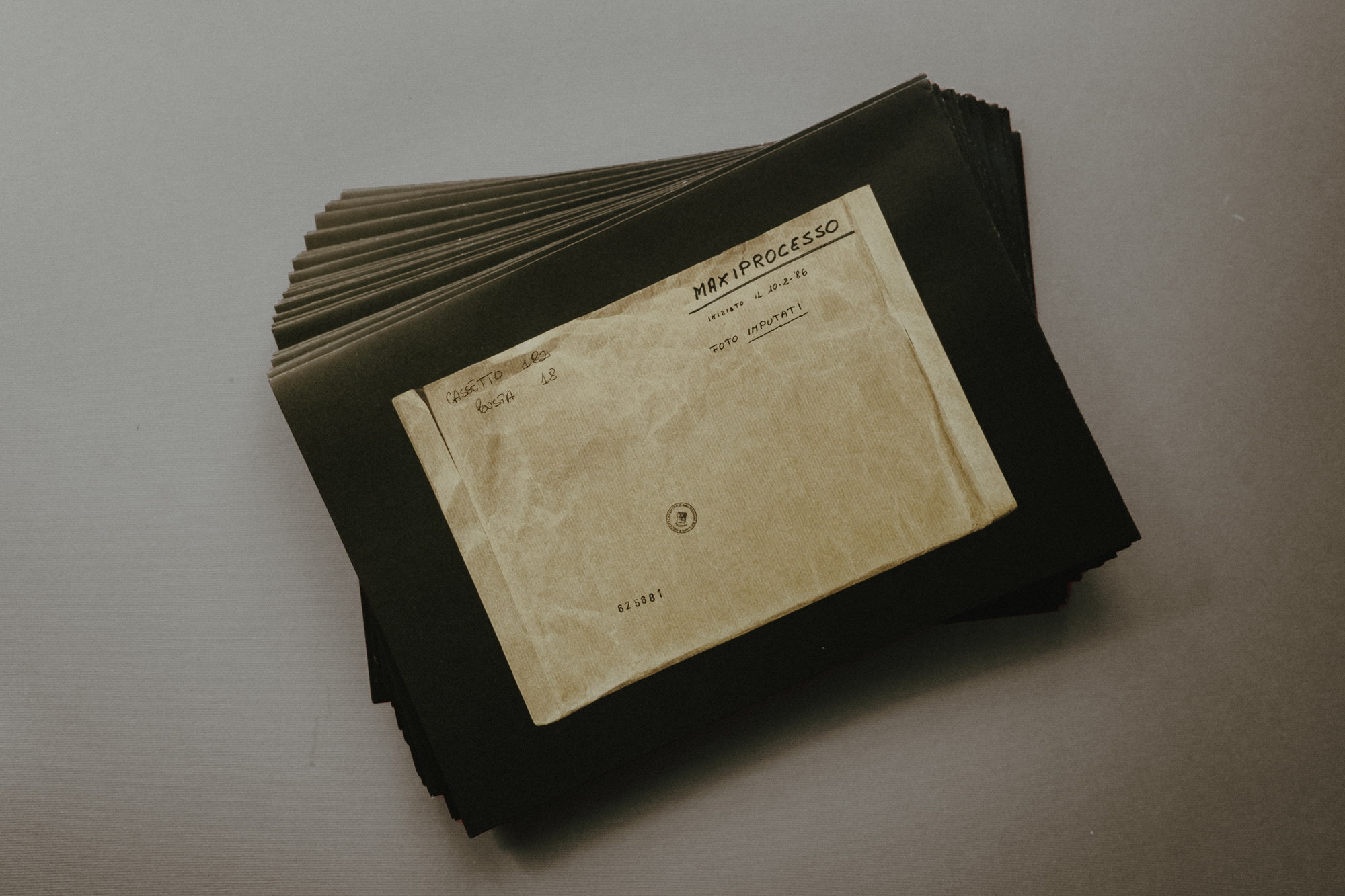
The project takes shape through the analysis and recomposition
of the materials contained in 40 archival
folders from L’Ora, selected within the newspaper’s original
categories (local news, crime reporting, Palermo).
The archive itself is made of thousands of folders dedicated
to events, demonstrations, massacres, murders,
public figures, and recurring themes in the history of
Palermo and Sicily, alongside sections devoted to national
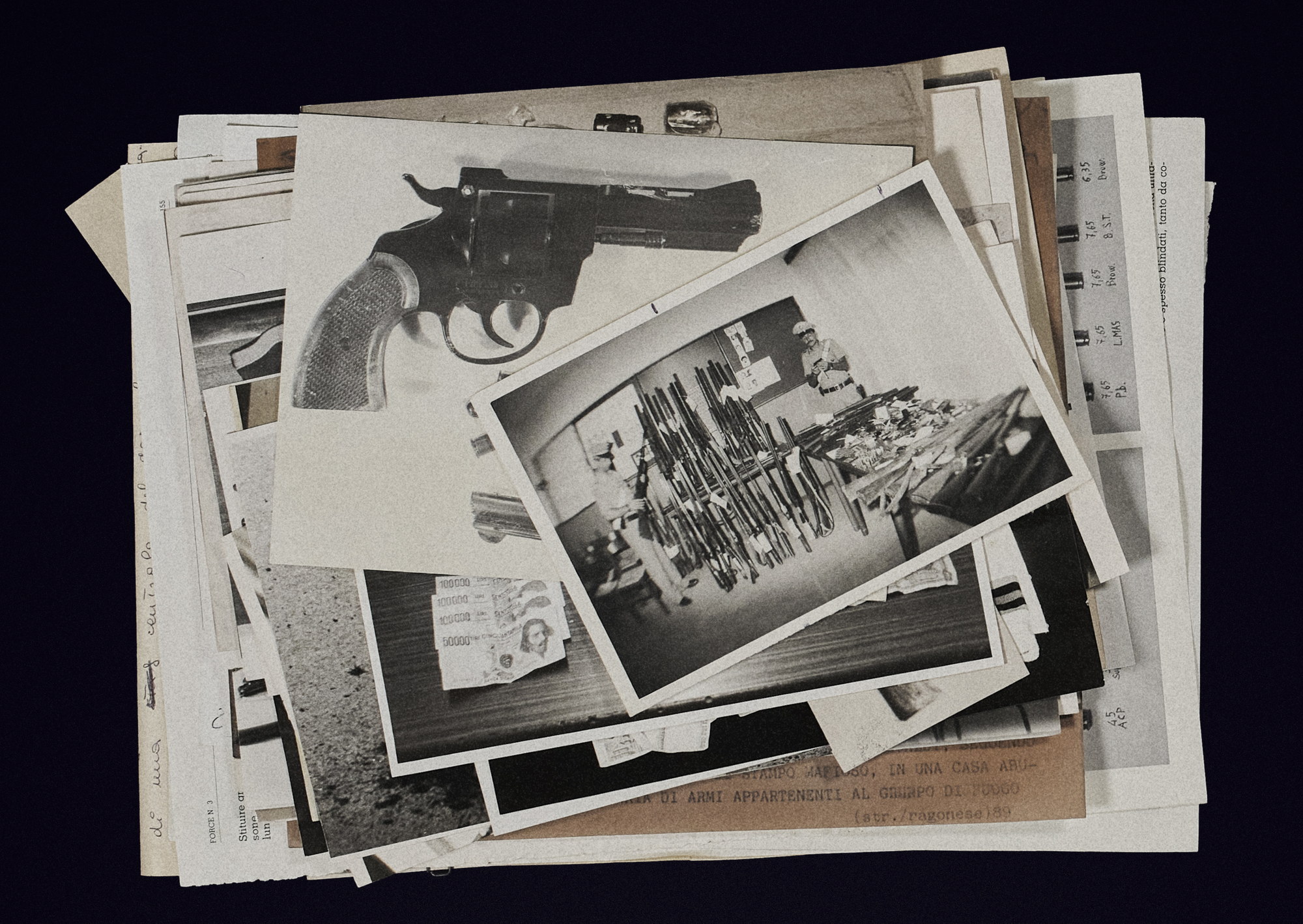
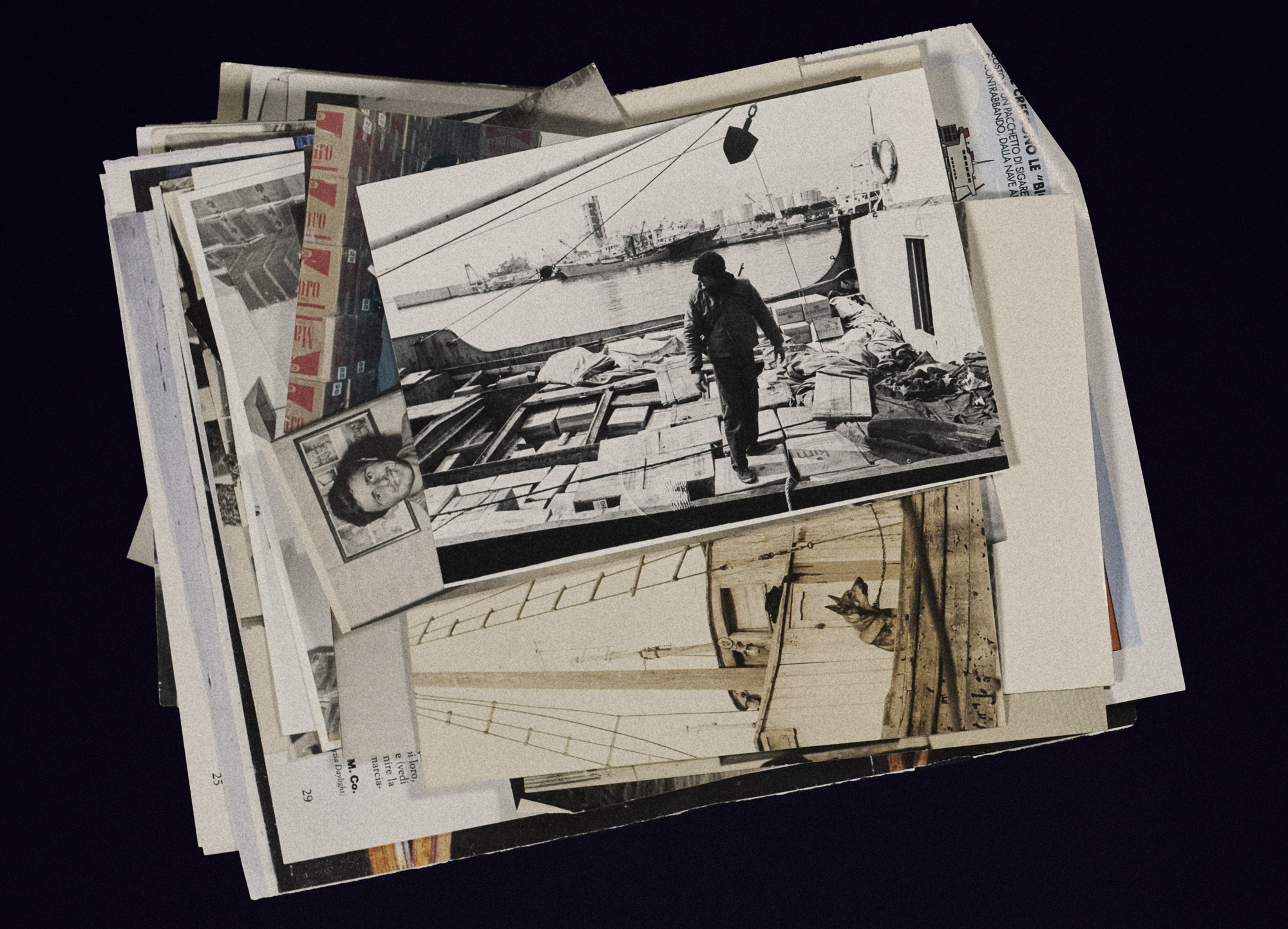
news, international news, and sports. Each folder
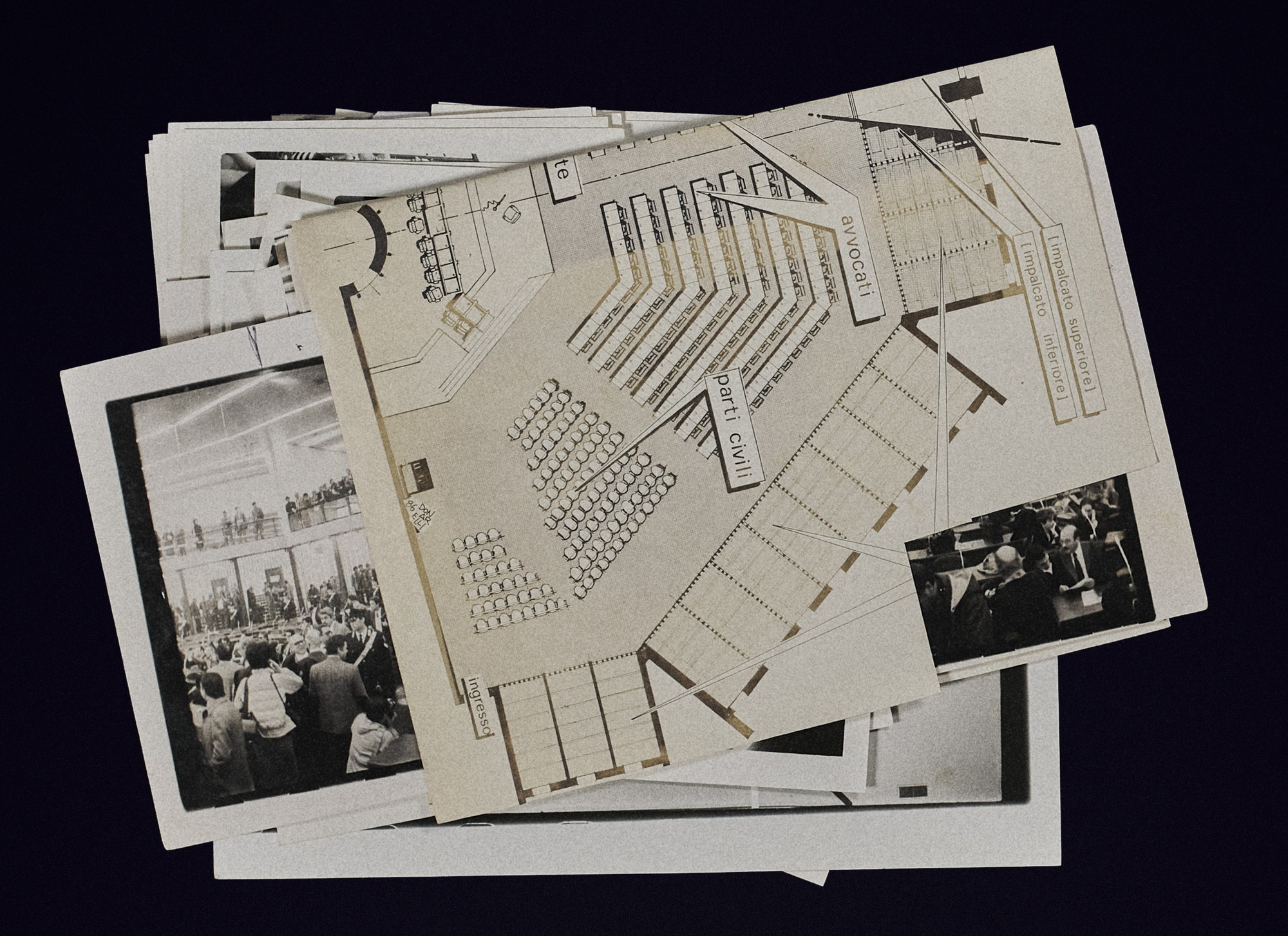
gathers a heterogeneous set of visual and paper materials,
including photographs, newspaper clippings, editorial
notes, photocopies, cartoons, and documents.
This selection does not aim to summarise the archive as
a whole, nor to offer a comprehensive overview. It traces
a necessarily partial route, meant to return key episodes,
figures, and contexts that help frame both the historical
period covered by the newspaper and the transformation
of an entire region. The folders chosen for the project
bring into focus socio-political nodes that marked Sicily
and Italy in the second half of the twentieth century, moving
through the Mafia phenomenon, power relations
and political mechanisms, as well as the social and cultural
landscape that shaped the island during those years.
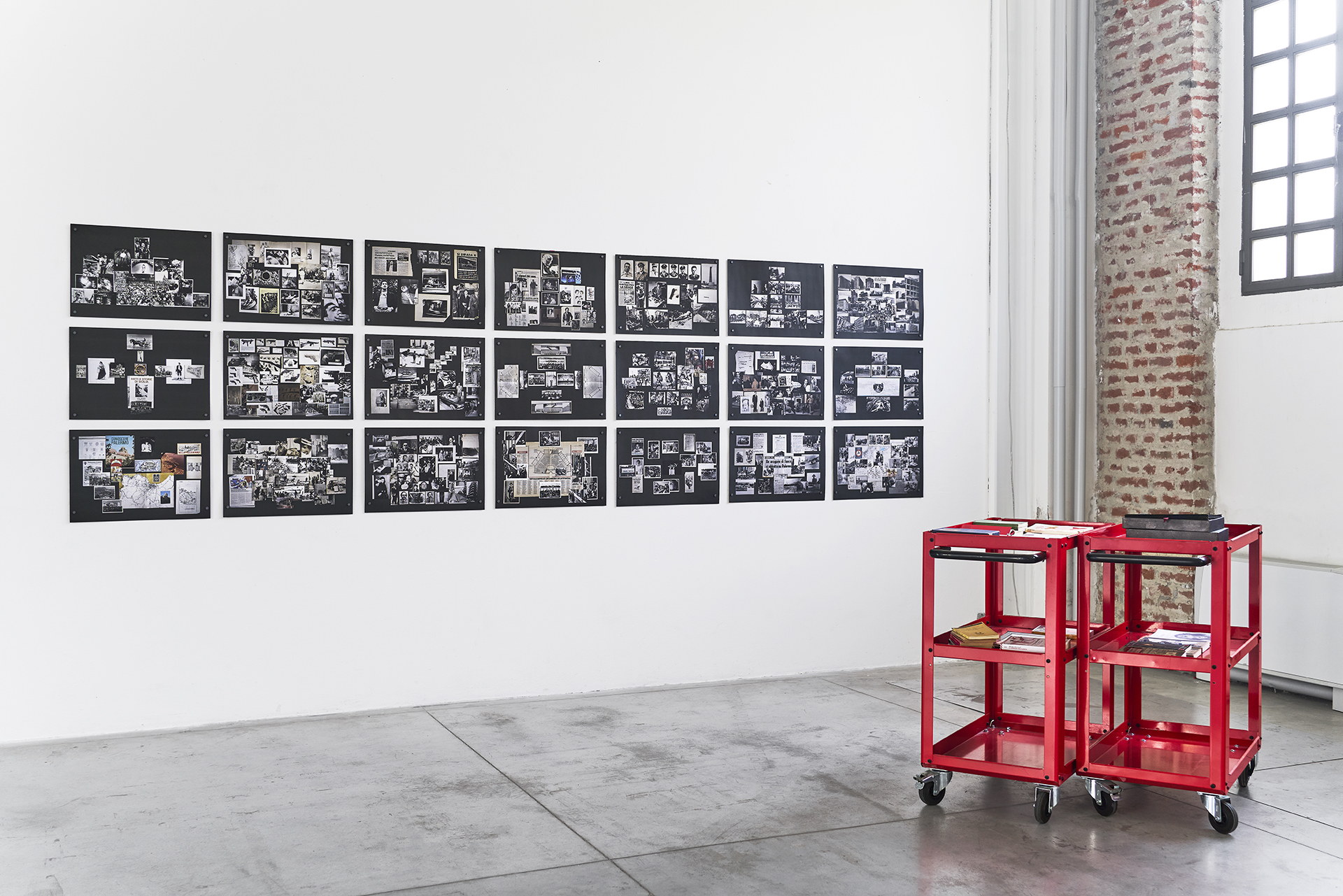
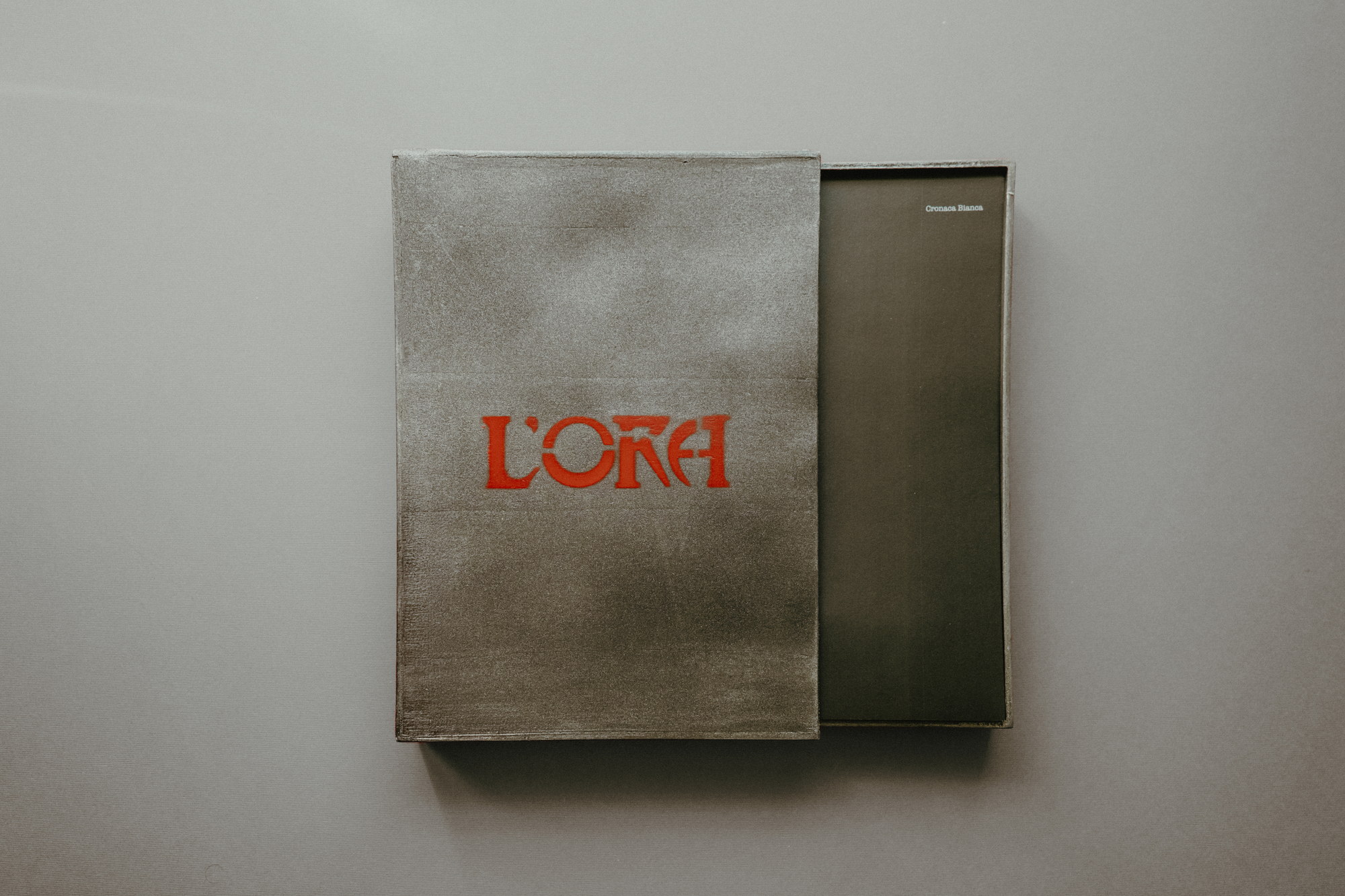
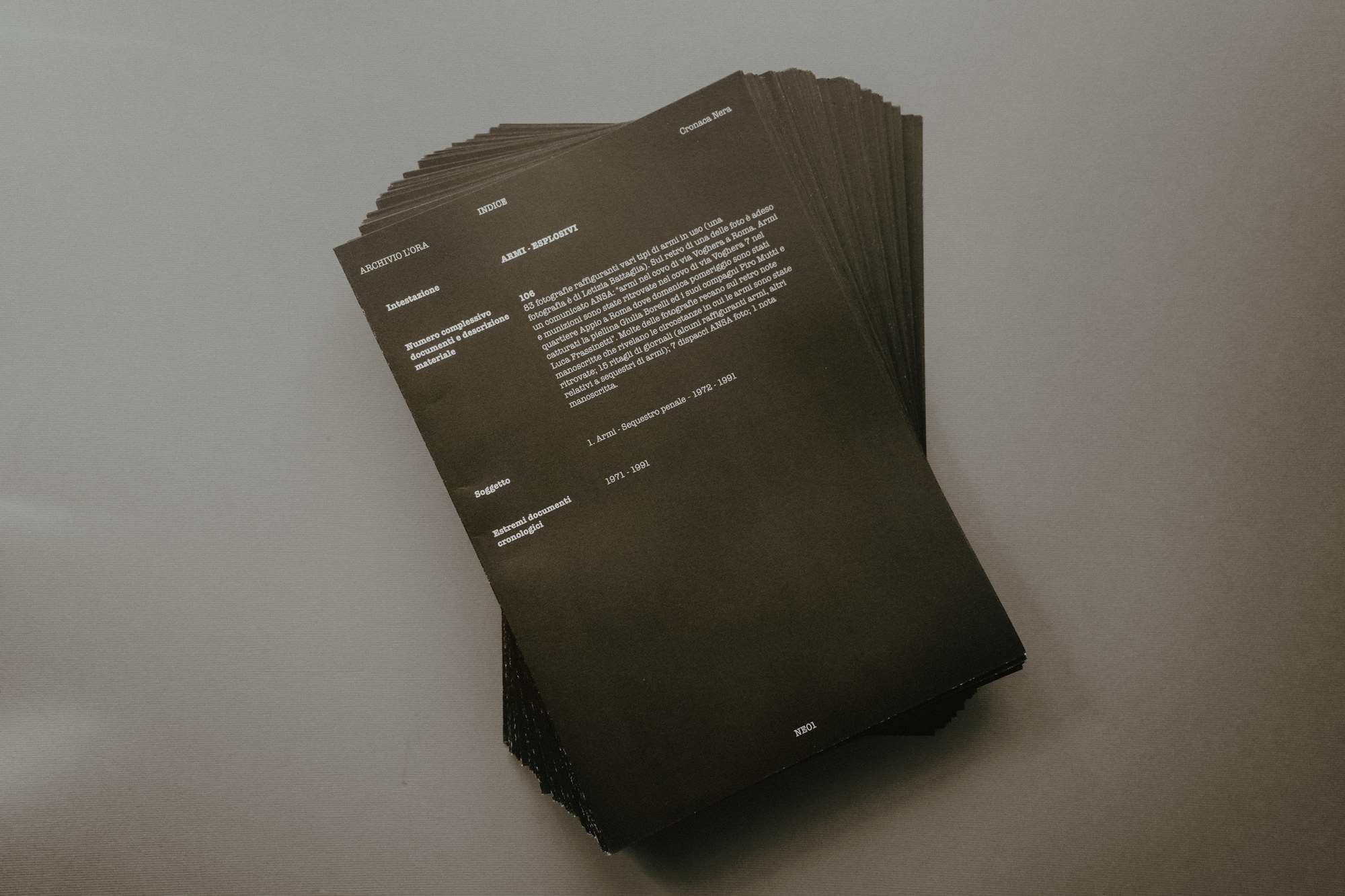
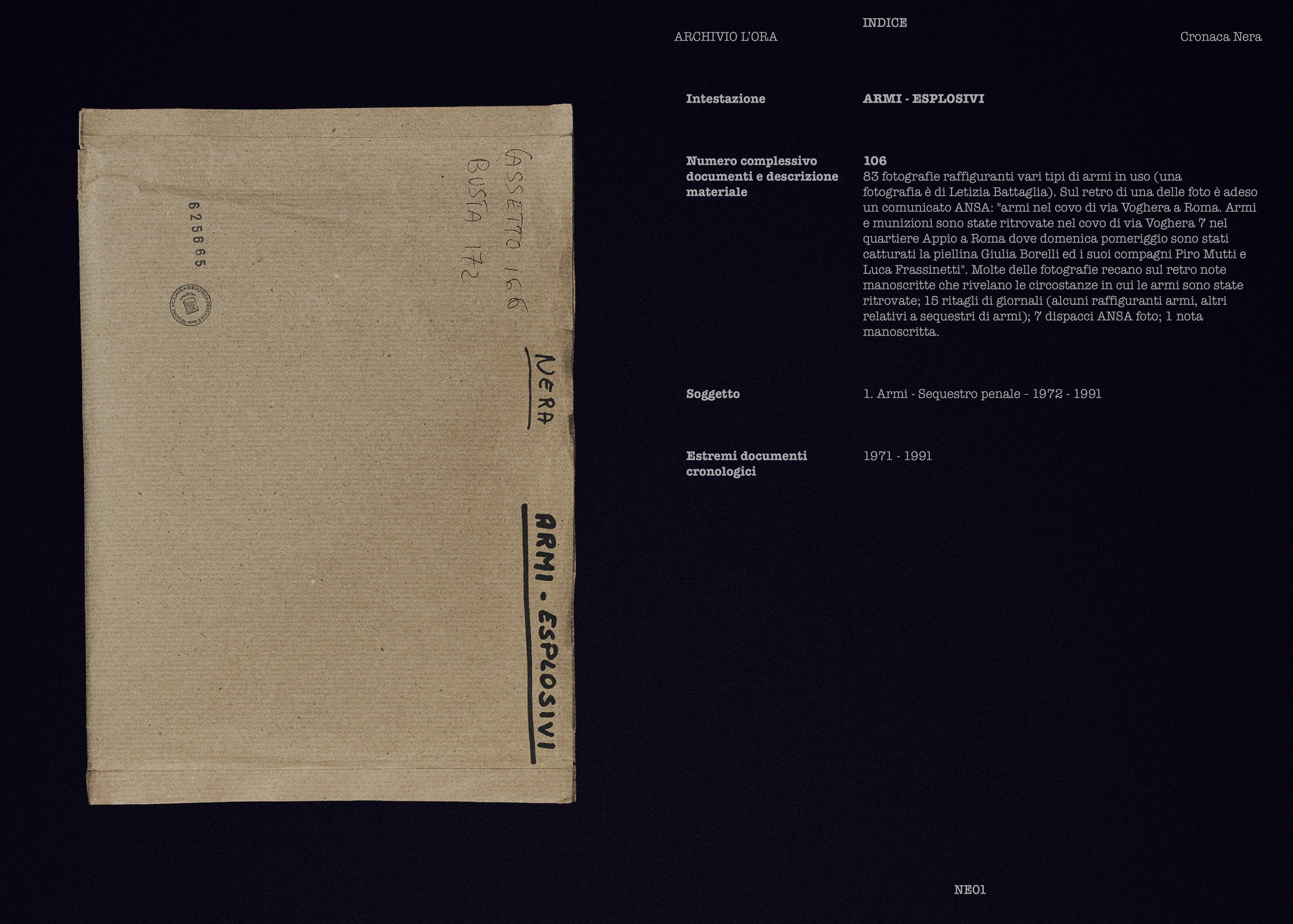
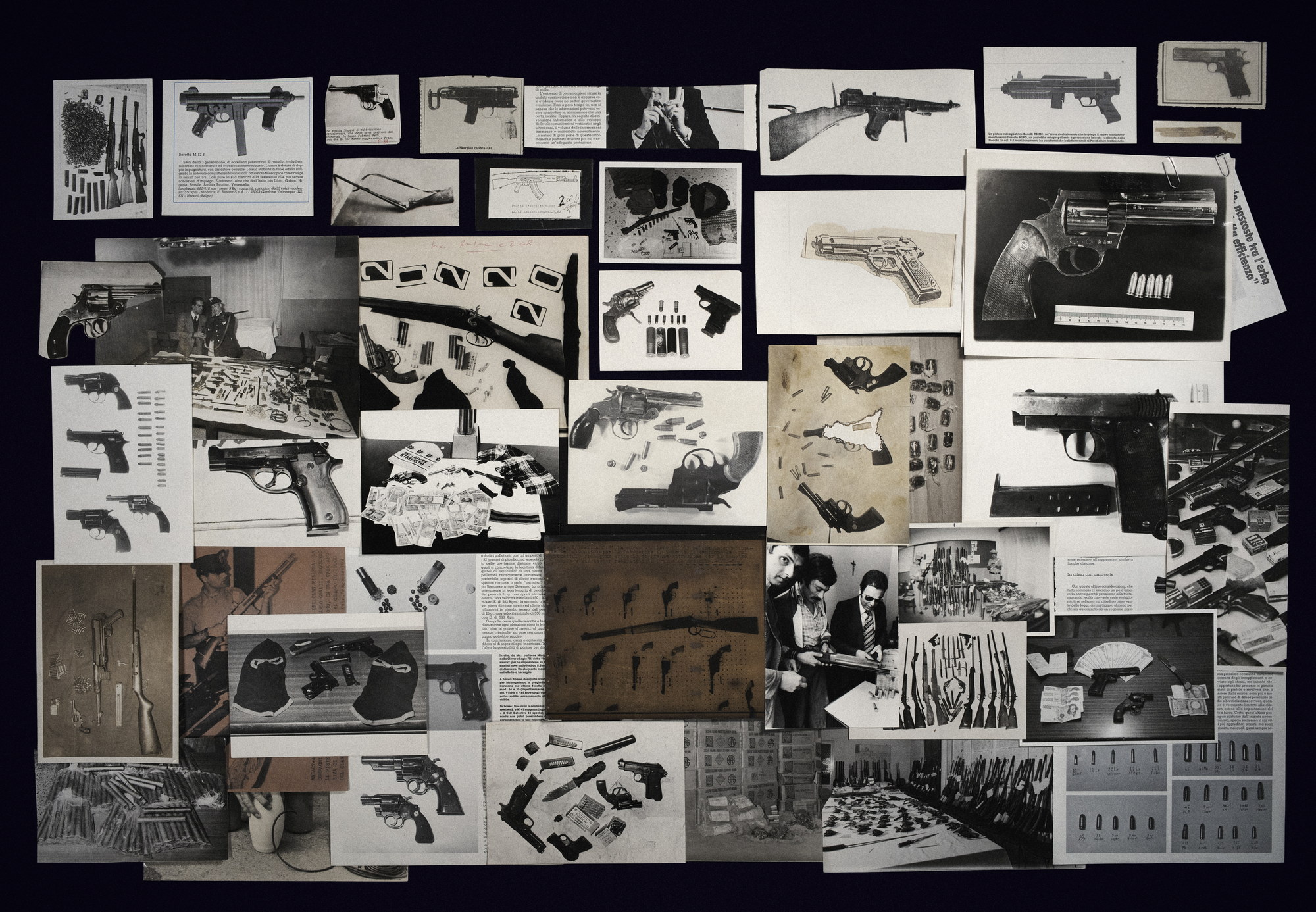
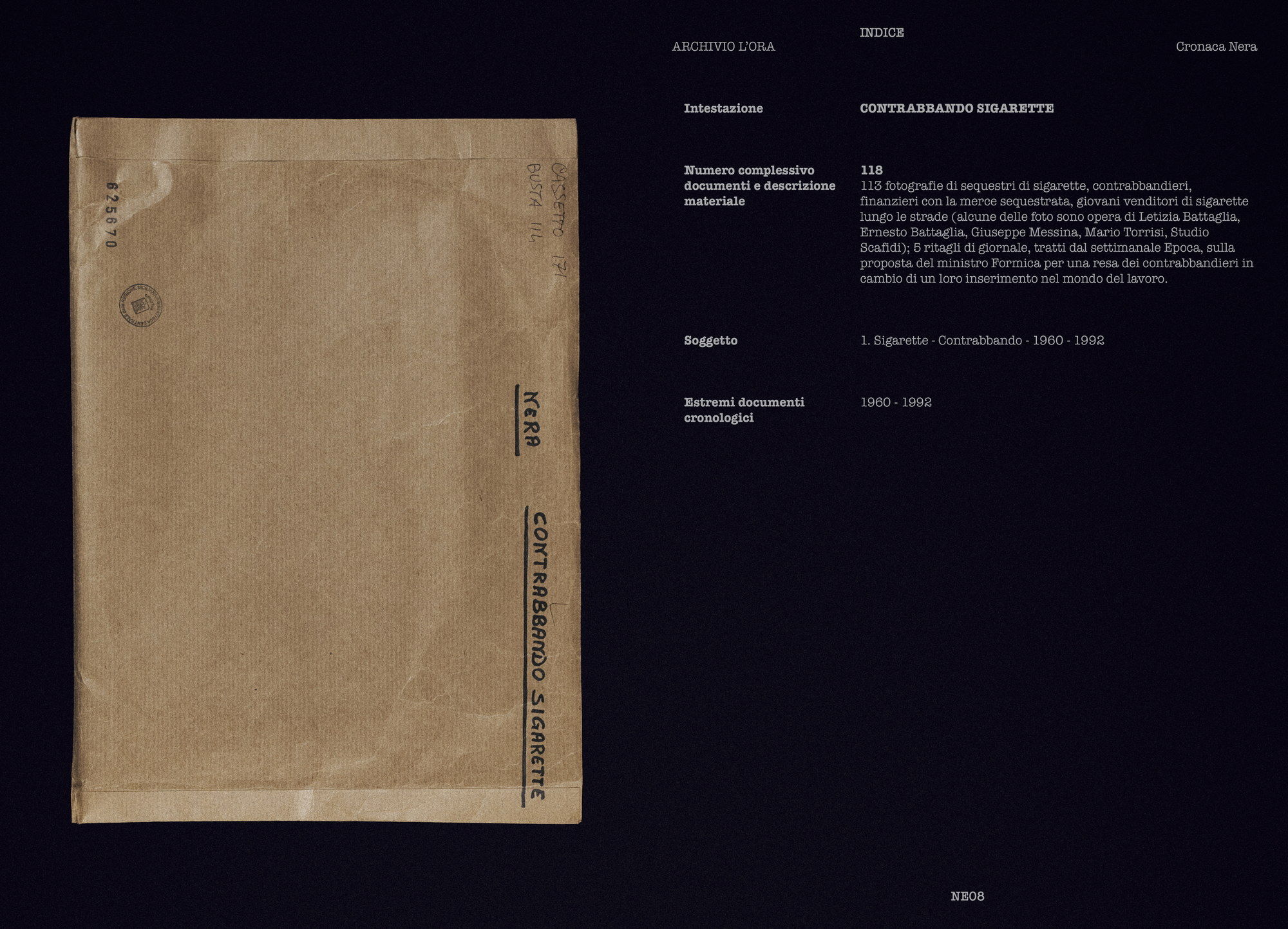
The work takes the form of a boxed set containing 40
plates in a near-A2 format. Each table is conceived as a
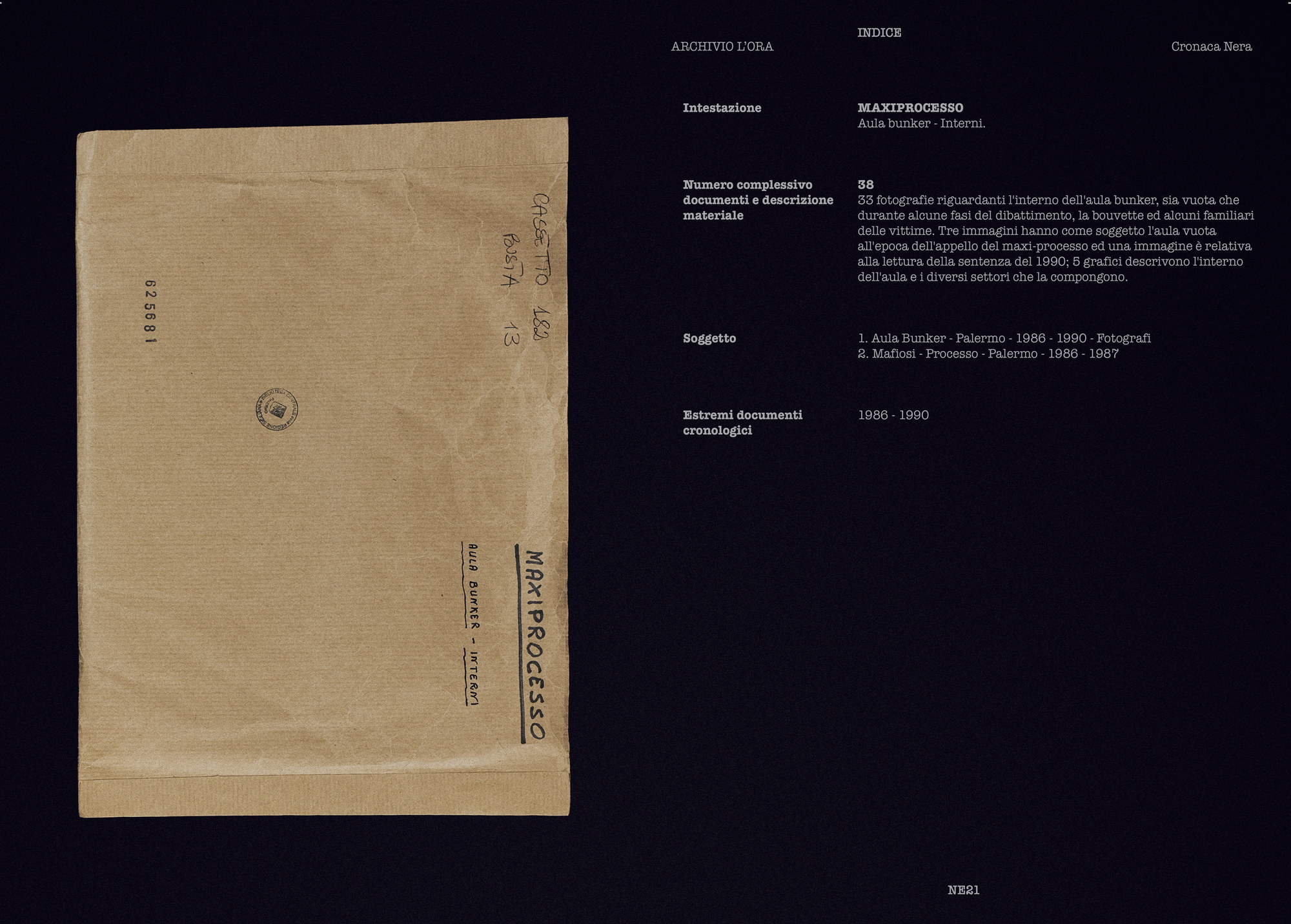
unit of consultation. On the front side, it presents an
index card that reproduces the archive information as
catalogued by the Library, alongside a photograph of
the original editorial folder selected and an image of
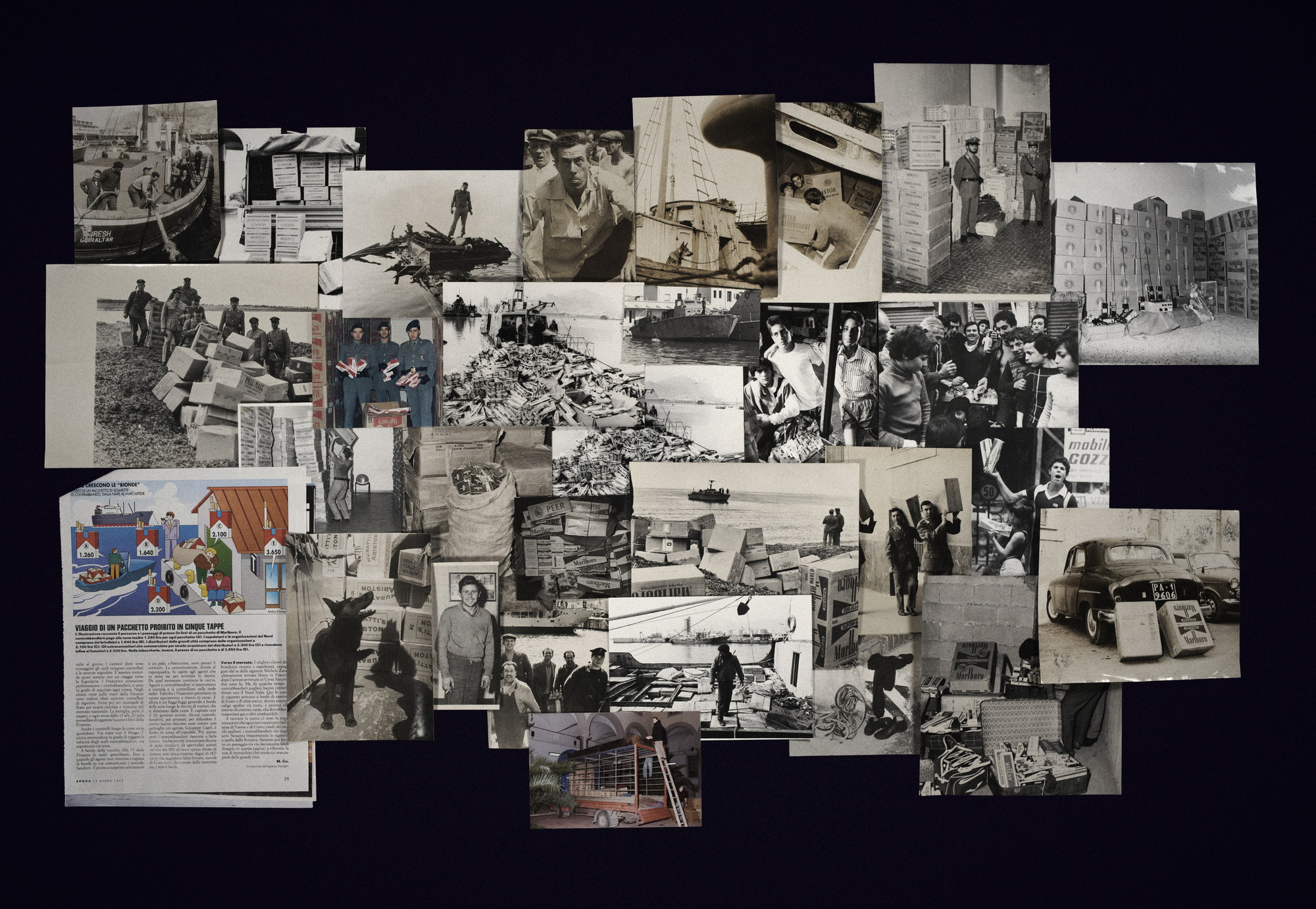
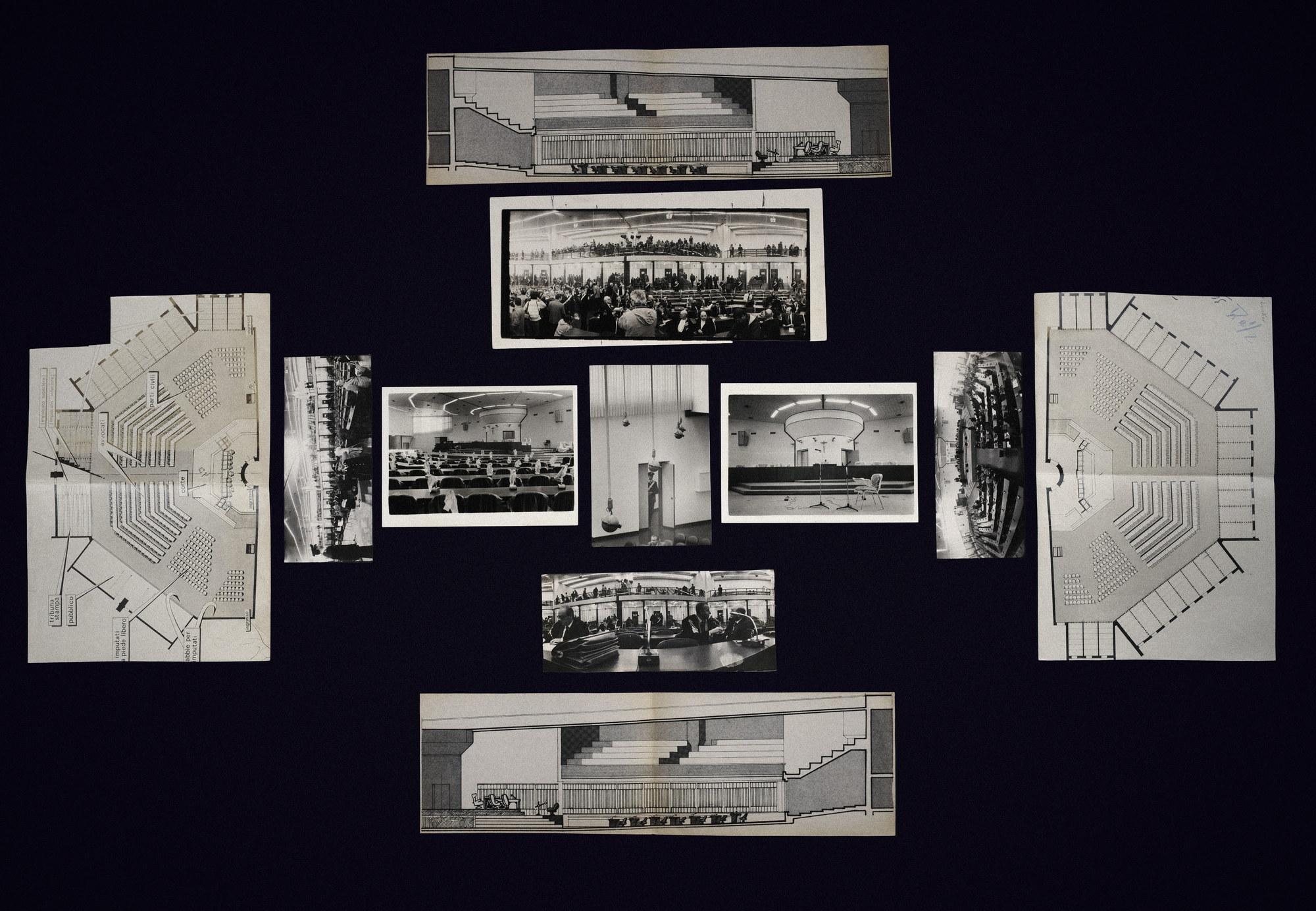
its contents. Inside, the sheet folds open in four parts
to reveal the table itself: an atlas-like composition
that recomposes and sets into relation the materials
contained in the folder (photographs, clippings, notes,
documents), making visible not only what the archive
holds but also its grammar, its internal montages, and
its logics of selection. In this way, the table does not
function as reproduction or repertory, but as a reading
device: a guided traversal of archival matter in which
the act of editing becomes an integral part of meaning.
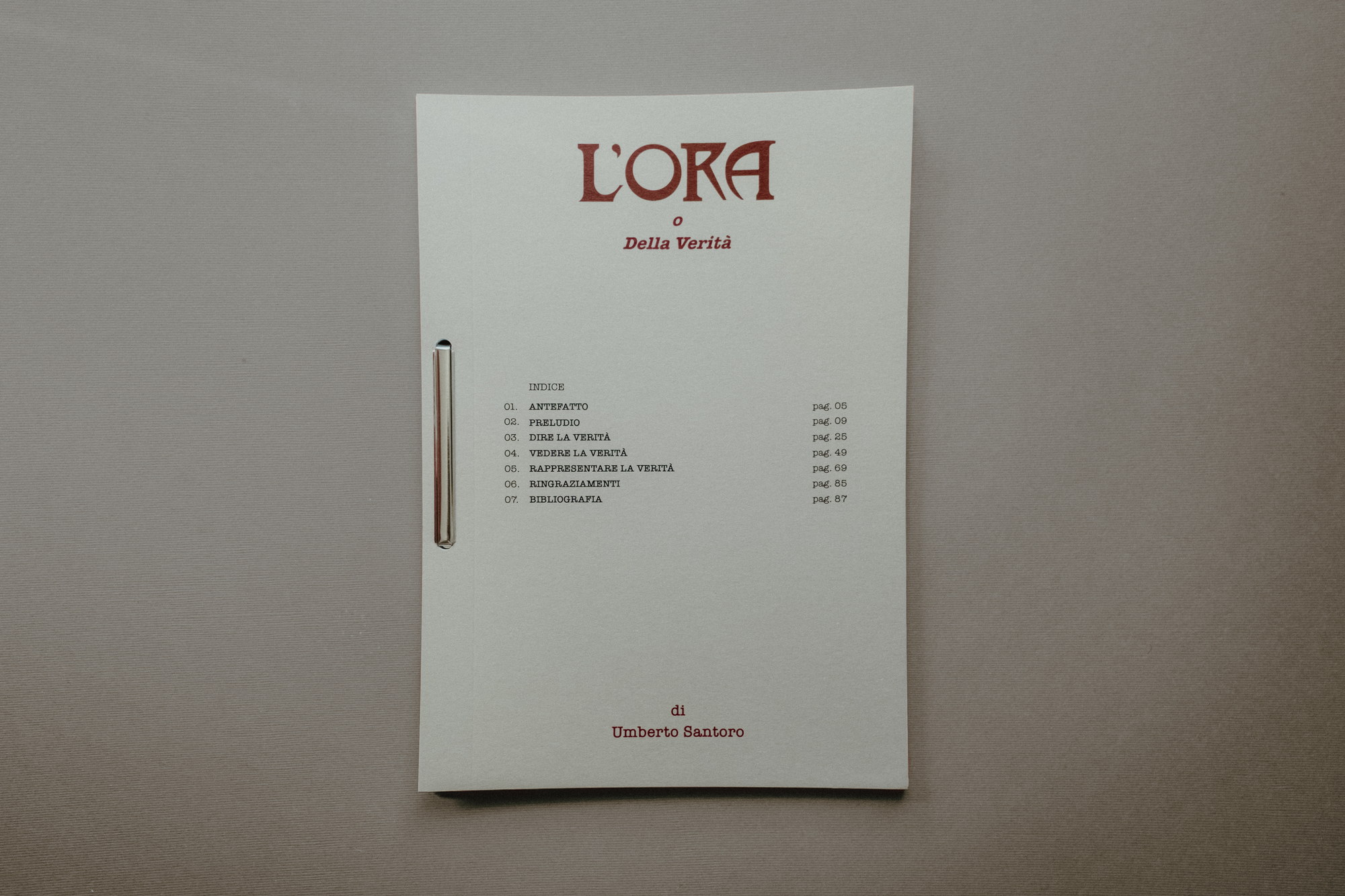
The project is accompanied by a companion text that
works both as a theoretical spine and as a navigation
tool for the box set, offering a thread through the archive
rather than an explanatory apparatus: it moves
across three connected gestures, from telling the truth
(drawing on Foucault’s parresia to frame truth as act,
risk, and responsibility rather than stable content), to
seeing the truth (engaging Merleau-Ponty, Sontag, and
Didi-Huberman on the ethics of looking, the limits of
perception, and the political weight of images), and
finally to representing the truth (bringing in Debord,
McLuhan, and Jaspers to address mediation, spectacle,
and the way representation turns conflict into public
history). The text runs alongside the tables as a critical
guide, helping the reader orient within the corpus,
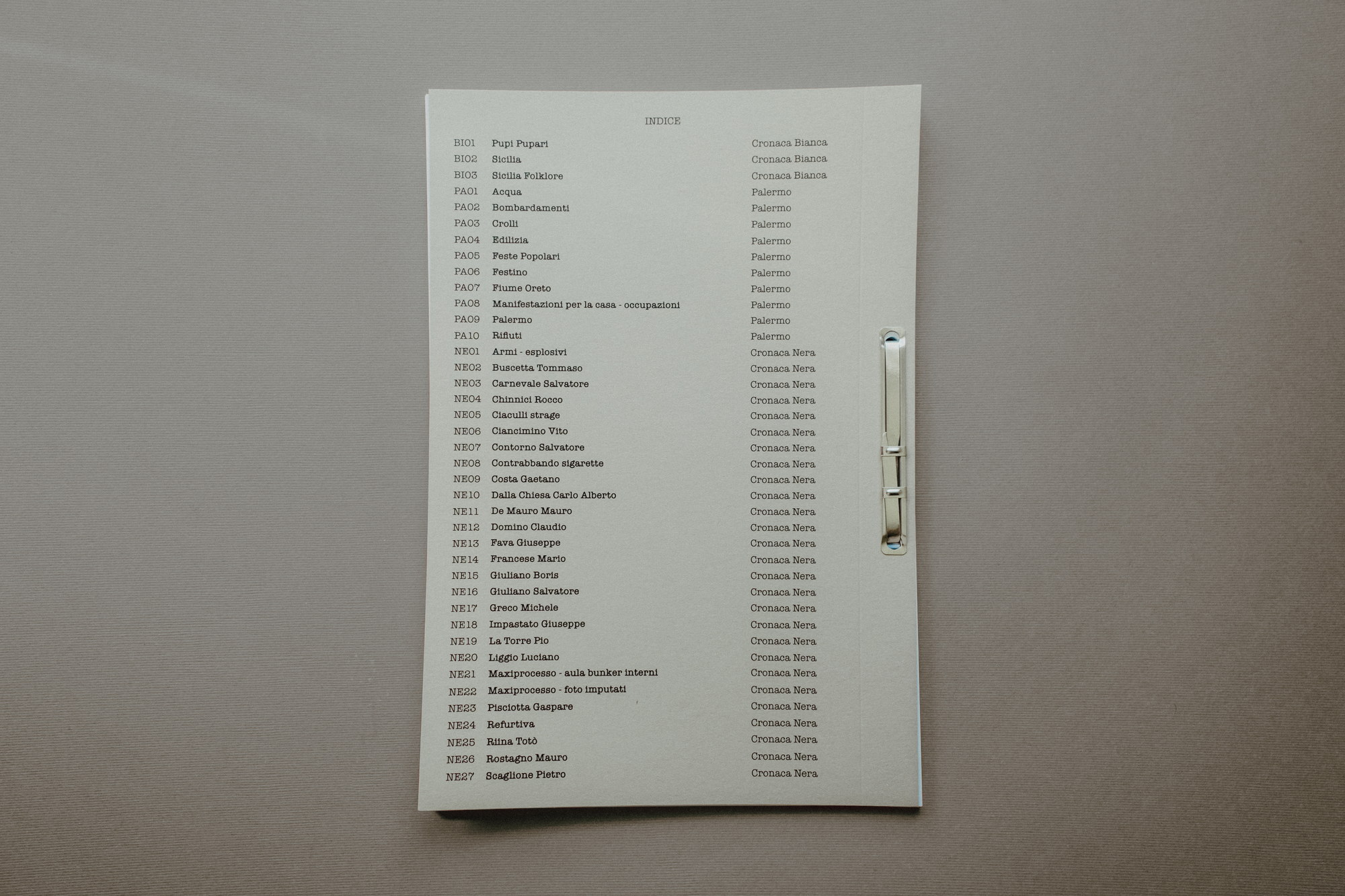
on the reverse side, an index of the tables maps
the set and enables cross-reading and return paths.
The project won the 5th edition of Premio Mila for Contemporary Photography funded by Fondo Malerba per la Fotografia
40 pag 38x55cm
80 pag text
30x20,5x5 cm wooden box
Umberto Santoro (Palermo, 1995) is a visual artist and photographer working between Palermo, Venice and Milan. His practice moves between documentary photography, archive and a critical reflection on the image as historically sedimented matter, working on the tensions between perception, memory and power. He understands the image as an active space of inquiry — a site of friction between what appears and what remains invisible, removed or sedimented — and investigates in particular the apparatuses of state and economic power and the forms of popular resistance that run through them, with a focus on Southern Italy and its historical and contemporary landscapes.
Fine art prints available — send a request for more information and commissions.